
Back Pain Treatment in Laguna Hills
Acute and chronic back pain — disc bulge or herniation, muscular strain, sciatic involvement, or a four-month ache that won't quit. The plan depends on what kind. First visit $49.
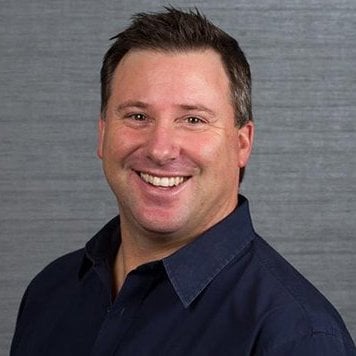
Sean Rundle, D.C.
- Palmer
- Gonstead
- Diversified
- Activator
- Thompson
Back Pain doesn't have a single cause.
Back pain doesn't have a single cause. A disc bulge or herniation presents differently from muscular strain. Sciatic involvement changes the plan. A four-month ache that's not responding to PT is a different conversation from a week-old tweak from lifting wrong.
The first step is figuring out what kind of back pain you have. Most low-back pain is mechanical — it comes from the joints, discs, ligaments and muscles of the lumbar spine rather than from disease. Mechanical pain has a pattern. It changes with position. It is worse after sitting, or worse after standing, or worse first thing in the morning and better once you move. That pattern is diagnostic information, which is why Dr. Rundle spends the first part of your visit asking about it.
The symptom picture matters as much as the location. Pain that stays in the low back and feels deep and dull points somewhere different than pain that travels into the buttock and down the leg. Pain that spikes when you cough or sneeze suggests disc involvement. Stiffness that eases after ten minutes of walking behaves differently than pain that gets worse the longer you are upright. Numbness, tingling, or weakness in the leg is a nerve finding and changes the urgency of the workup.
The examination is built to separate those cases. Orthopedic testing loads the lumbar spine in specific directions to see what provokes and what relieves. Neurologic testing checks reflexes, sensation, and muscle strength to establish whether a nerve is involved and at what level. Motion-study X-ray, taken on-site, shows how your lumbar segments move under load — not just how they sit in a static image. A segment that has stopped moving, or one that moves too much because its neighbours have locked up, is visible on a motion study and invisible on a standard film.
Treatment follows the finding. Dr. Rundle draws on five technique systems — Gonstead, Diversified, Activator, Thompson drop-table, and soft-tissue work — because a lumbar disc case and a facet-joint case do not respond to the same approach. An acutely inflamed back is handled more gently at first. A chronic, long-locked segment takes a different kind of persistence. Where a disc is compressed, spinal decompression may be added alongside adjustment.
What recovery looks like depends on what you came in with. Acute mechanical back pain often changes quickly. A chronic pattern that has been building for years usually improves in stages, and the early gains tend to show up as better sleep and easier mornings before they show up as a pain score. Dr. Rundle will tell you after the exam what he expects in your case, and will tell you if he thinks chiropractic is not the right answer for it.
What's included in your $49 first visit.
Consultation with Dr. Rundle
You tell him what is going on; he asks the questions that fill in the picture.
Chiropractic exam
Orthopedic, neurologic, and movement testing.
Motion-study X-ray analysis
Taken on-site; shows how your spine moves under load, not just how it sits.
Your customized treatment plan
Dr. Rundle walks you through what he sees, what the plan is, and what to expect.
For back pain, the exam is working out which structure is generating it — disc, facet joint, muscle, or nerve — and whether the pain travels. The motion study is read for lumbar segments that have stopped moving and for neighbouring segments compensating by moving too much.
What back-pain patients tell us changed.
- Patients tell us they sleep through the night again.
- Patients tell us they stop reaching for the bottle of ibuprofen.
- Patients tell us they work without pain.
- Patients tell us they get back on the bike, the trail, or the floor with their kids.
We don't promise a number of visits. An acute back responds on a different timeline than one that's been guarding for four years, and Dr. Rundle will give you his read after he's examined you — not before.
Back Pain FAQ.
- Is chiropractic adjustment safe if I have a herniated disc?
- In most cases, yes — but the technique changes. Dr. Rundle does not use the same approach on an acutely herniated lumbar disc that he would use on a locked facet joint. That is part of why the motion-study X-ray happens before any treatment plan: he wants to see what the disc and the segments around it are actually doing. If the findings suggest you need imaging or a referral beyond what chiropractic can address, he will tell you.
- My back pain comes and goes. Is it worth coming in during a good week?
- Yes, and often it is the better week to come in. Recurring back pain that resolves on its own and returns is usually a mechanical pattern that has not been corrected — the flare-up is the symptom, not the problem. Examining you between episodes gives a cleaner picture of how your spine moves when it is not guarding.
- I already did physical therapy and it did not hold. Why would this be different?
- Physical therapy and chiropractic address different parts of the problem. PT largely builds strength and endurance in the muscles supporting the spine. Chiropractic addresses joint motion — segments that have stopped moving properly. If the underlying restriction was never resolved, strengthening around it can help and then fade. Dr. Rundle will look specifically at whether that is what happened in your case.
- Should I use ice or heat on my low back?
- For a new injury or an acute flare with inflammation, ice is usually the better first choice. For chronic stiffness with no acute swelling, heat before activity tends to help more. Dr. Rundle will give you specific at-home guidance for your case, because the answer genuinely depends on what the exam finds.
- When is back pain something I should see a medical doctor for instead?
- Back pain with loss of bowel or bladder control, progressive leg weakness, unexplained weight loss, fever, or pain following significant trauma needs medical evaluation, not a chiropractic adjustment. Dr. Rundle screens for those findings during the examination and will refer you out if he sees them. Most back pain is mechanical, but the screening is not optional.
He was recommended by a friend when I had a bad flare-up of my chronic lower back pain… Recently I had another flare-up and I knew that I should immediately go see Dr. Rundle! We caught it early.
Ready when you are.
Your first visit is $49. Book online or call (949) 588-7011.
Book Your $49 New Patient Visit